Description
Overview
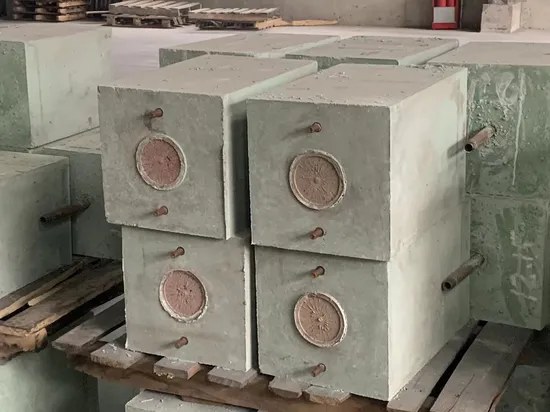
The ladle purging plug is the key functional element of secondary refining. Set into the bottom of the ladle, it blows an inert gas — normally argon — into the molten steel. The rising bubbles stir the whole ladle: temperature and composition even out, alloy additions and deoxidizers melt and spread quickly, and non-metallic inclusions are carried up into the slag. How well the plug works decides how clean the steel is when it leaves the ladle.
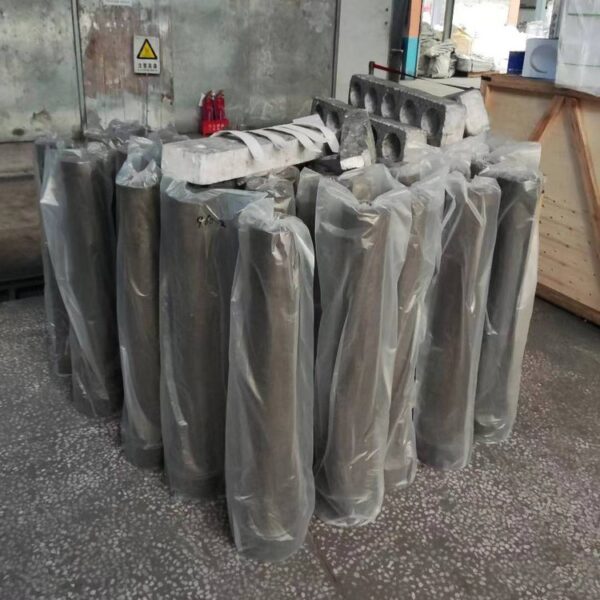
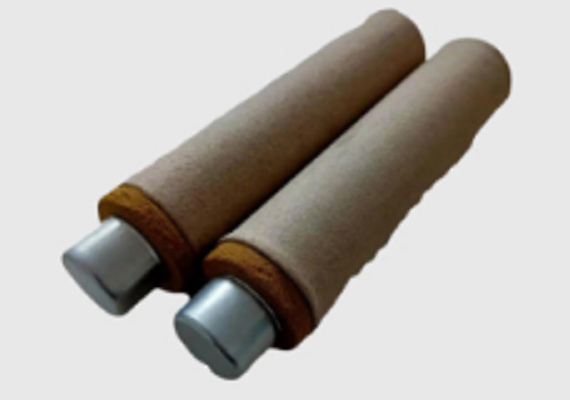
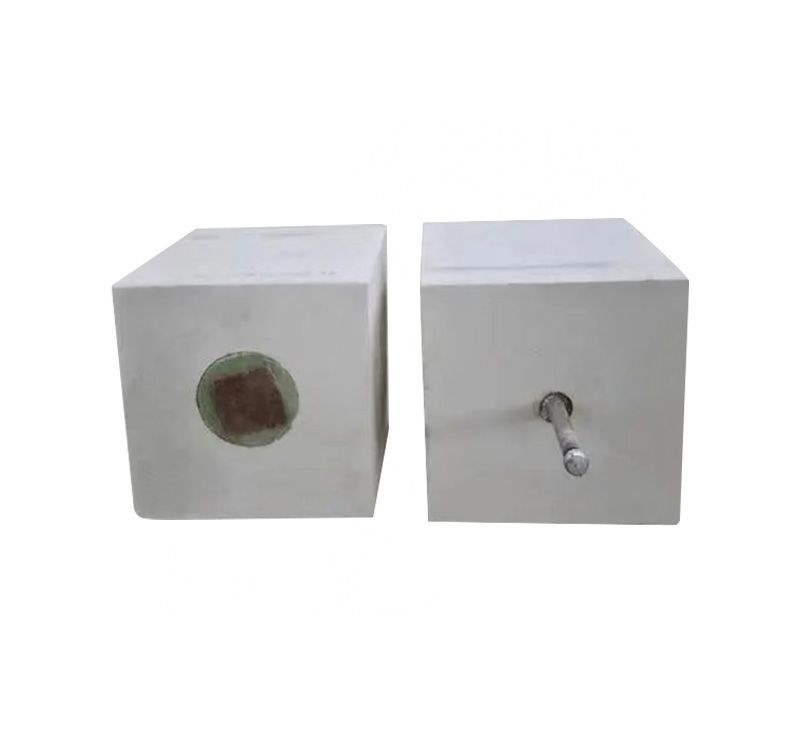
We distribute ladle purging plugs in slit type and dispersing (porous) type, in chrome-corundum, corundum-spinel and non-oxide bonded corundum materials, so the plug can be matched to the ladle size and the steel grade. The plug is supplied with its seat brick as an assembly, ready to set into the ladle bottom. LF ladles over 100 t normally use two bottom purging plugs, run in two stages — a high-flow stir to mix, then a low-flow soft blow to float inclusions out.
Applications
- Ladle bottom argon blowing, LF ladle refining
- Temperature and composition homogenizing in the ladle
- Inclusion removal for clean steel (soft blowing stage)
- LF ladles, VD/VOD ladles and EAF ladles
Specifications
- Types: slit type, dispersing (porous) type, direct-through directional type, slit directional type
- Materials: chrome-corundum, corundum-spinel, non-oxide bonded corundum; high-purity corundum, mullite, chrome sand
- Bulk density: ≥3.0 g/cm³ (dispersing type, isostatic pressed)
- Sintering: 1,400–1,700 °C for 2.5–3.5 hours
- Gas: argon (inert gas); plug + seat brick assembly available
- Typical use: two bottom purging plugs per LF ladle over 100 t; treatment 40 min or more, soft blowing 8–12 min
- Argon flow for mixing: approx. 67–70 m³/h (published test data)
- Dimensions: made to drawing, to match the ladle bottom and seat brick