Description
Overview
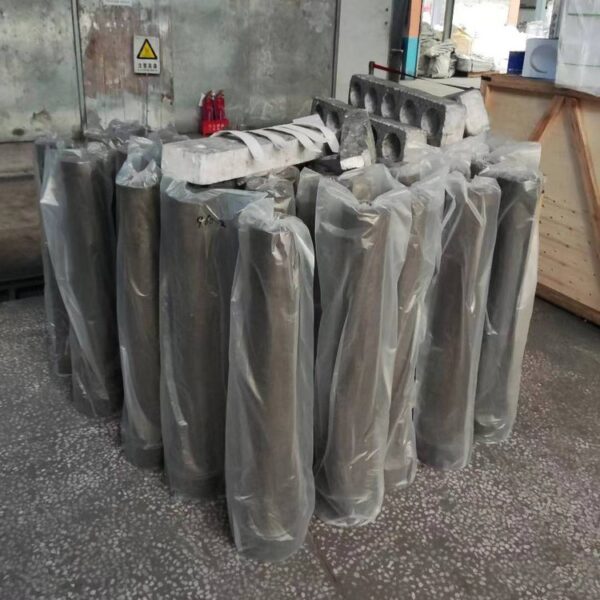
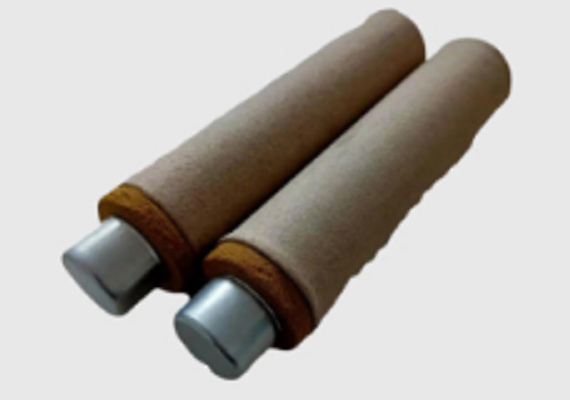
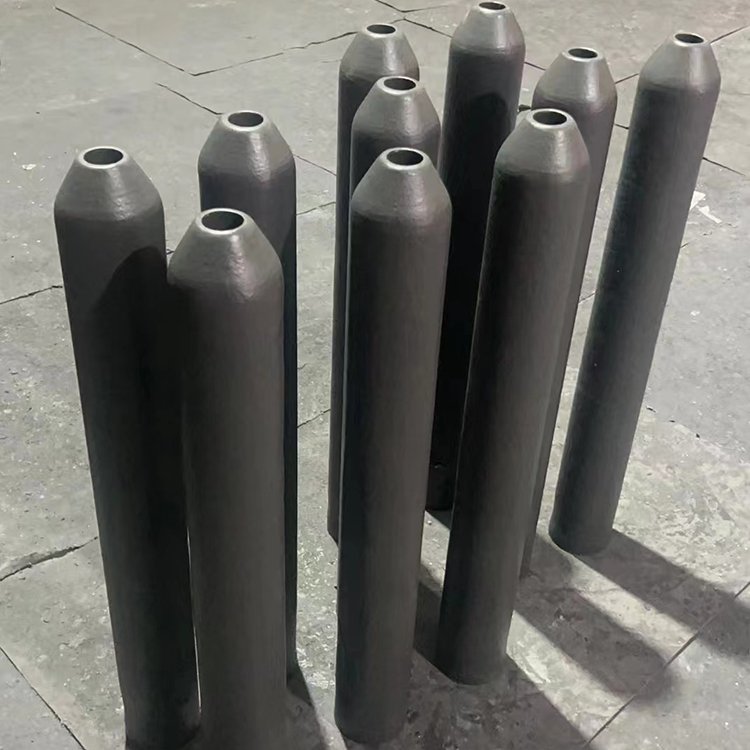
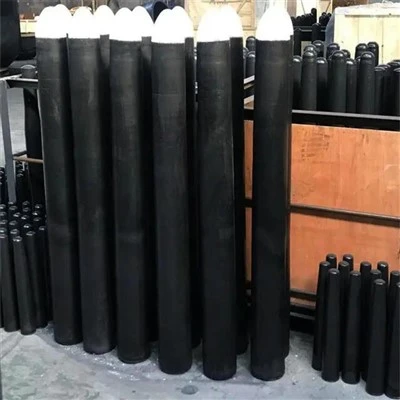
The continuous casting stopper rod is the flow control element of the tundish. It hangs from the tundish cover into the tundish, and its head sits in the bowl of the tundish upper nozzle. Lifting the rod opens the gap between the head and the nozzle bowl and lets steel flow to the mould; lowering it closes the gap and stops the flow. The rod is the caster’s throttle — it holds the mould level steady, and it must respond precisely through the whole sequence, heat after heat.
We distribute monoblock stopper rods in alumina-carbon (Al2O3-C), magnesia-carbon (MgO-C), zirconia-carbon (ZrO2-C) and spinel-carbon (Spinel-C) materials. The head — the part that takes the full force of the steel stream — is supplied in the material that suits the steel grade: magnesia-carbon for high-oxygen, high-manganese and calcium-treated steels, zirconia-carbon for severe erosion, alumina-carbon for most carbon steels. An argon channel through the rod is available to prevent clogging at the nozzle. Rods are made to drawing to match the tundish and the upper nozzle.
Applications
- Continuous casting, tundish flow control (billet, bloom, slab)
- Mould level control through the whole casting sequence
- Carbon steels, high-manganese steels, high-oxygen steels, calcium-treated steels (head material matched to the grade)
- Automatic pouring and mould level control systems
Specifications
- Types: monoblock stopper rod; alumina-carbon (Al2O3-C), magnesia-carbon (MgO-C), zirconia-carbon (ZrO2-C), spinel-carbon (Spinel-C)
- Head: Al2O3 72% (Al2O3-C); MgO ≤65% (MgO-C); ZrO2 ≥60% (ZrO2-C); spinel ≥10% MgO (Spinel-C)
- Body: Al2O3 45–55%; C+SiC ≥23%
- Bulk density: ≥2.45–2.80 g/cm³ (head up to ≥3.40 g/cm³ for ZrO2-C)
- Apparent porosity: ≤17%
- Cold crushing strength: ≥20–25 MPa (head); modulus of rupture ≥5–8 MPa
- Length: approx. 1,465–1,650 mm (example); made to drawing
- Argon channel: main channel diameter 33–35 mm; sub-channel diameter 1.5–2.7 mm; argon flow approx. 8 L/min (with porous plug)
- Dimensions: made to drawing, to match the tundish and the upper nozzle bowl