
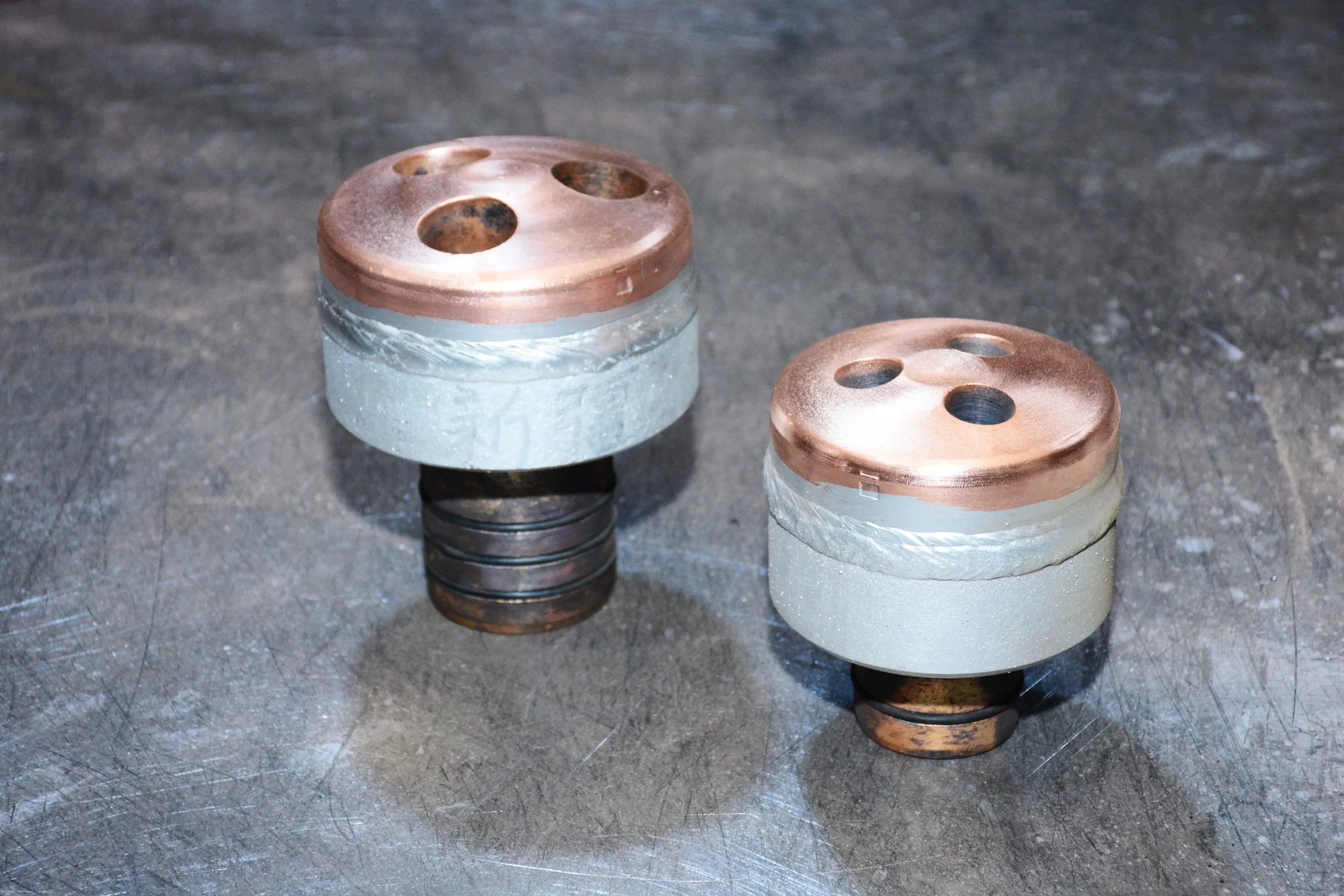
A cast oxygen lance nozzle is formed by pouring molten copper into a mould, not machined from a solid piece. This guide covers how it is made, what it does well, and when to choose it over a forged nozzle.
1. How a cast oxygen lance nozzle is made
- Raw material: high-purity electrolytic copper.
- The copper is melted in an induction furnace, then cast in a sand core.
- The nozzle comes out of the mould close to its final shape, with far less machining than a forged part.
2. Complex shapes, without machining limits
- Casting is not restricted by machining conditions. Any complex shape can be formed in the mould.
- The hole pattern can be arranged to suit the smelting process — nozzle number, angle, and layout follow the blowing target, not the cutting tool.
- The cooling water channel can also be arranged to suit water-cooling needs, so the nozzle stays cool where the heat is highest.
3. What this means for service life
- A well-designed cooling channel keeps the nozzle face cooler, which helps the oxygen lance tip last longer.
- A hole pattern matched to the process gives even blowing, less splash, and steadier heats.
- Casting alone does not guarantee a long life. Water flow, blowing practice, and nozzle condition decide how long any nozzle lasts — cast or forged. Check nozzle wear between heats.
4. Cast nozzle vs forged nozzle
- Cast oxygen lance nozzle: more freedom in nozzle geometry and cooling channels; good for complex shapes.
- Forged oxygen lance nozzle: dense structure, steady under thermal cycling.
- No universal winner. Trial both on the same furnace, same blowing practice, then compare service life.
5. Where a cast nozzle fits
- BOF oxygen lance tips: hole pattern and cooling channels can be set for deep-bath blowing and heavy splashing.
- EAF oxygen lance tips: layout can be set for cutting power and coverage.
- Before comparing, note four facts: furnace type and size, oxygen flow rate, lance diameter, and how old nozzles failed.
6. What to check before you order
- Confirm three things: the hole pattern and nozzle number suit your blowing target; the cooling water channel suits your water flow; the connection matches your lance.
- First order: send a drawing, or a sample of the nozzle you use now. Custom nozzles made to drawing are standard.
Checklist before you order
- Furnace type, size, and duty.
- Oxygen flow rate and lance diameter.
- Nozzle number, hole pattern, and layout, for the blowing result you want.
- Cast or forged, decided by trial.
- Cooling channel, connection, and drawing confirmed.
- Inspection and handling routines in place.
A cast nozzle earns its place when the shape is complex and the cooling channel matters. Match the design to the furnace, trial it on one furnace first, and let service life decide.